📄 Digital book in PDF · read it on your phone or print it
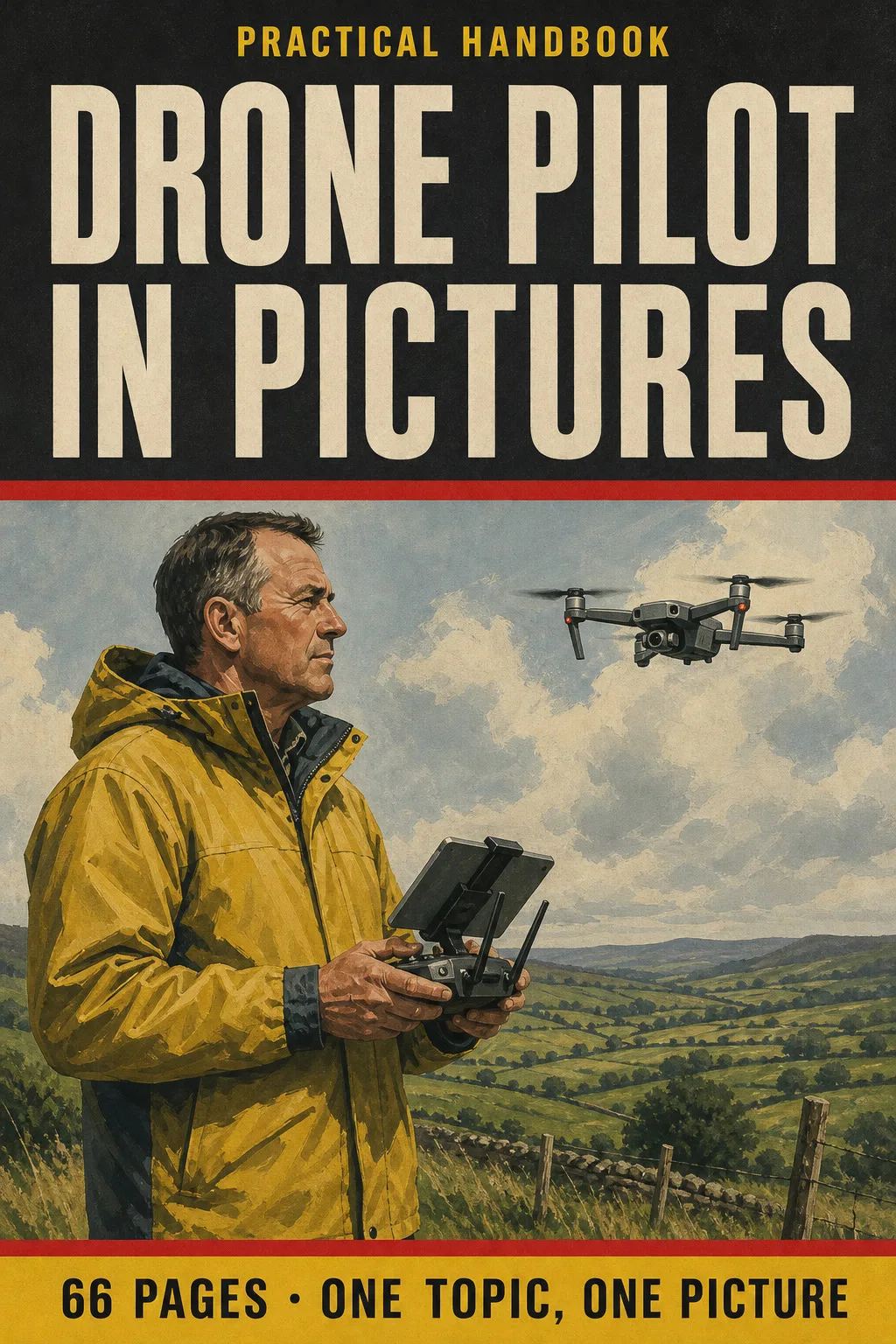
Updated for the CAA rules in force from 1 January 2026. Flyer ID and Operator ID, flight restriction zones, the 120 m limit, A1, A2 and A3 distances, UK class marks, Remote ID, the preflight check and the A2 CofC. Each topic has its own page: the drawing first, then what you need to remember. 66 illustrated pages.
🔒 Secure checkout · PDF by email · 30-day guarantee
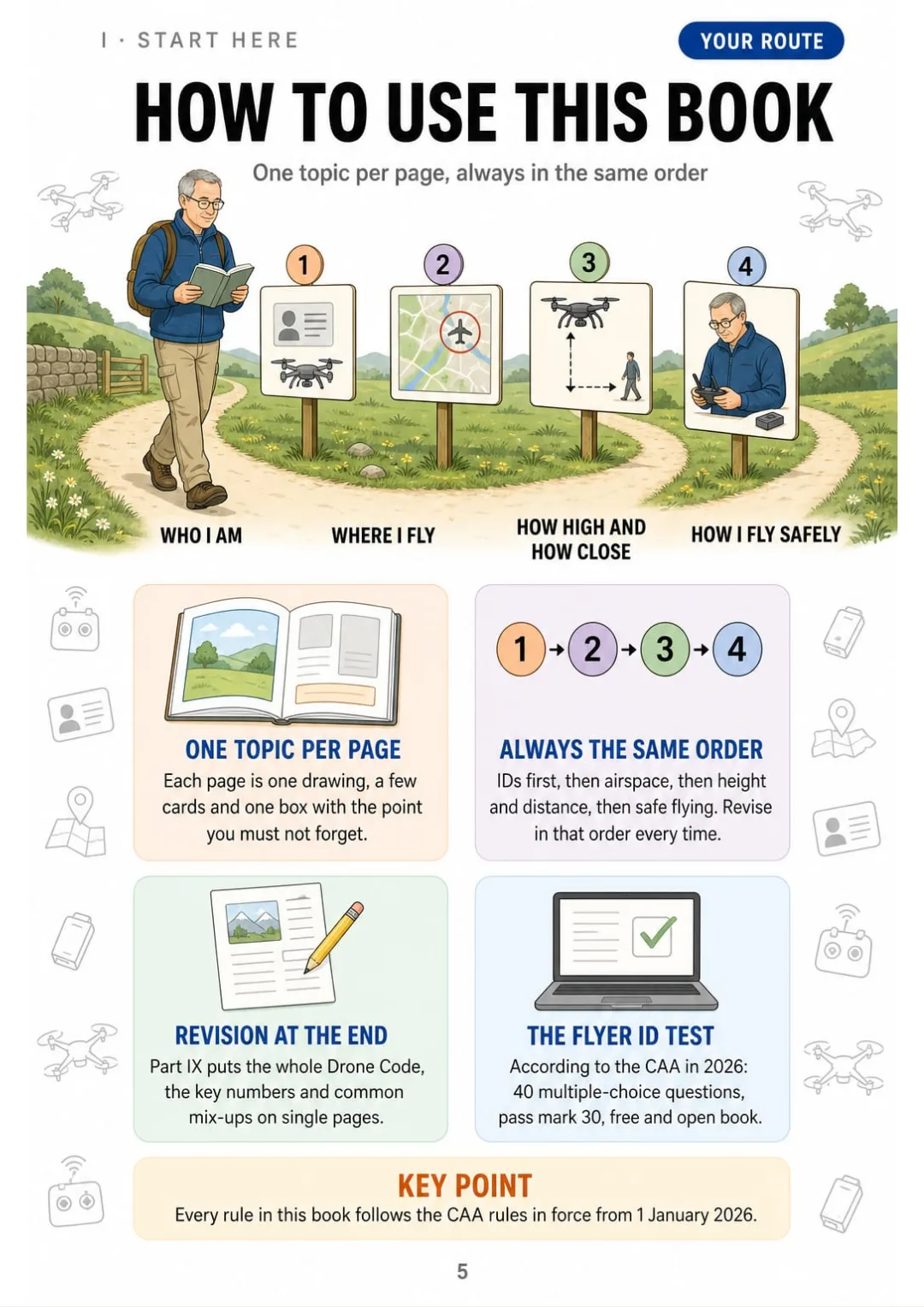
Every page has a large drawing and a box with the numbers and rules you need to know:


Swipe to see more →
These are real pages from the book. The table of contents is the full one: 9 parts and 62 topics.
You're standing in a field with the drone on the grass, batteries charged, ready to go. And you can't say for sure whether this spot is clear.
The guidance does cover it, but it's spread over several pages: flight restriction zones, NOTAMs, local byelaws, permission to take off. It's all written in paragraphs, and none of it is in an order you can follow in a field.

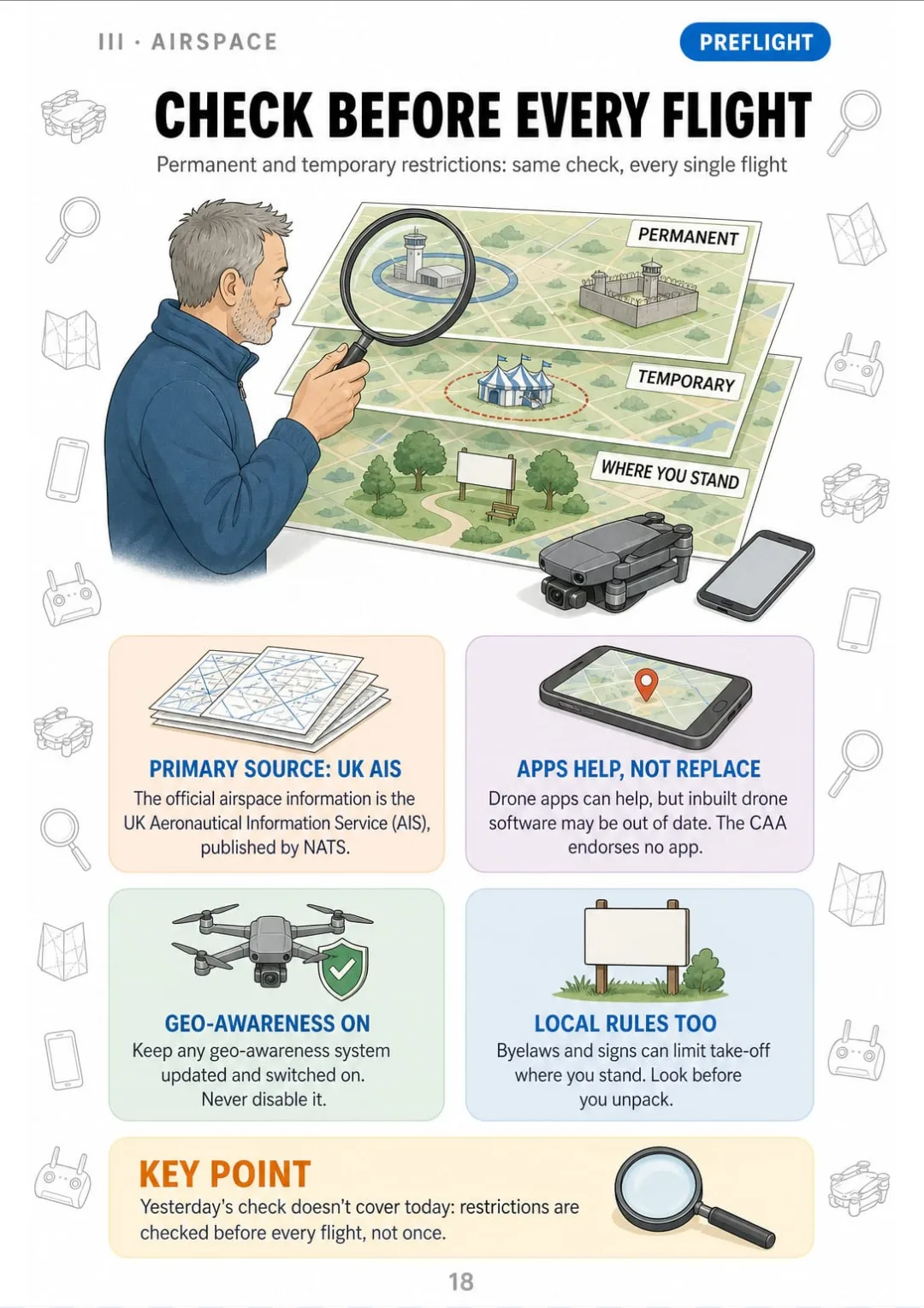
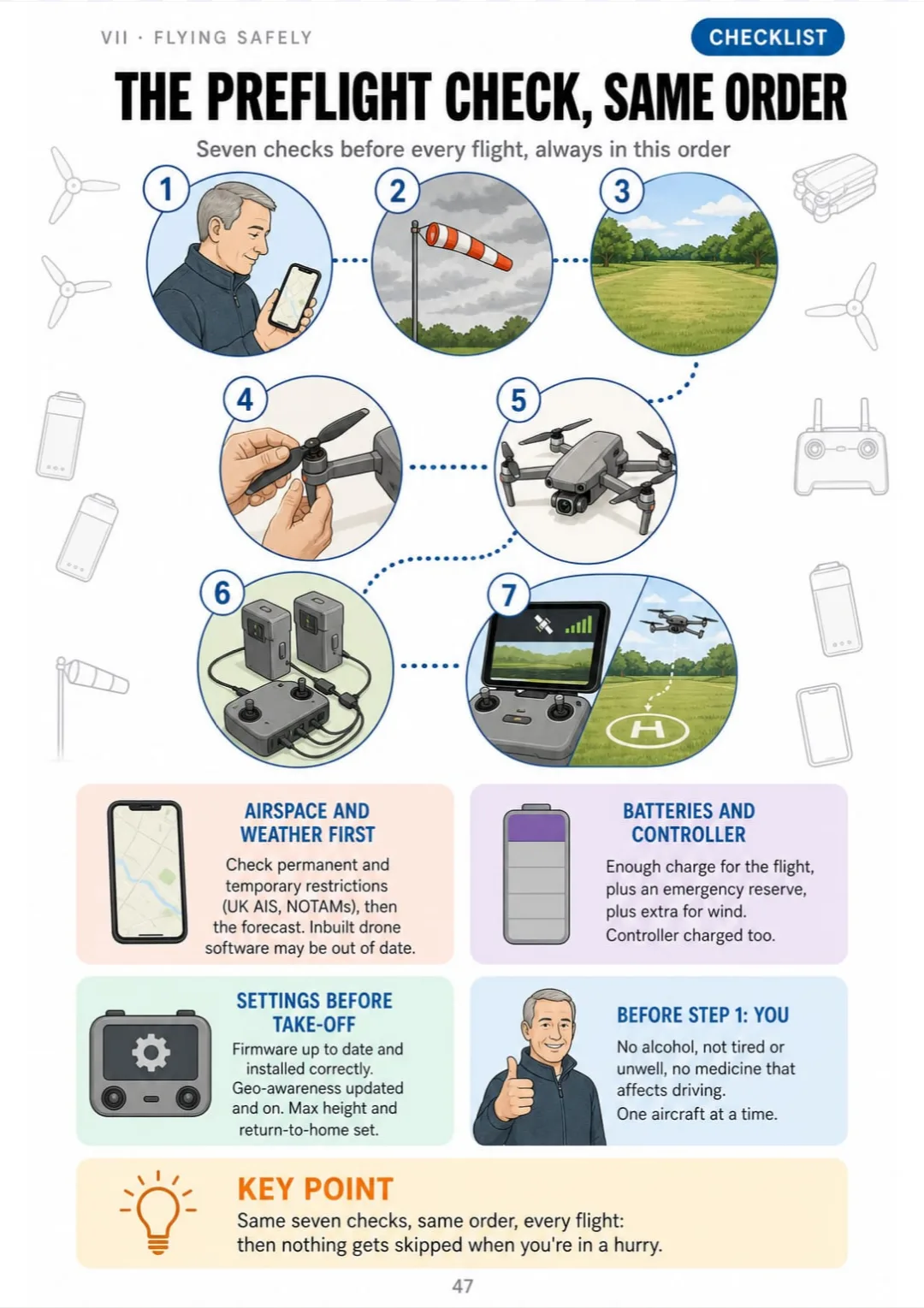
In the book, checking before every flight is one page: three boxes, permanent, temporary and where you stand, with the UK AIS by NATS marked as the primary source.
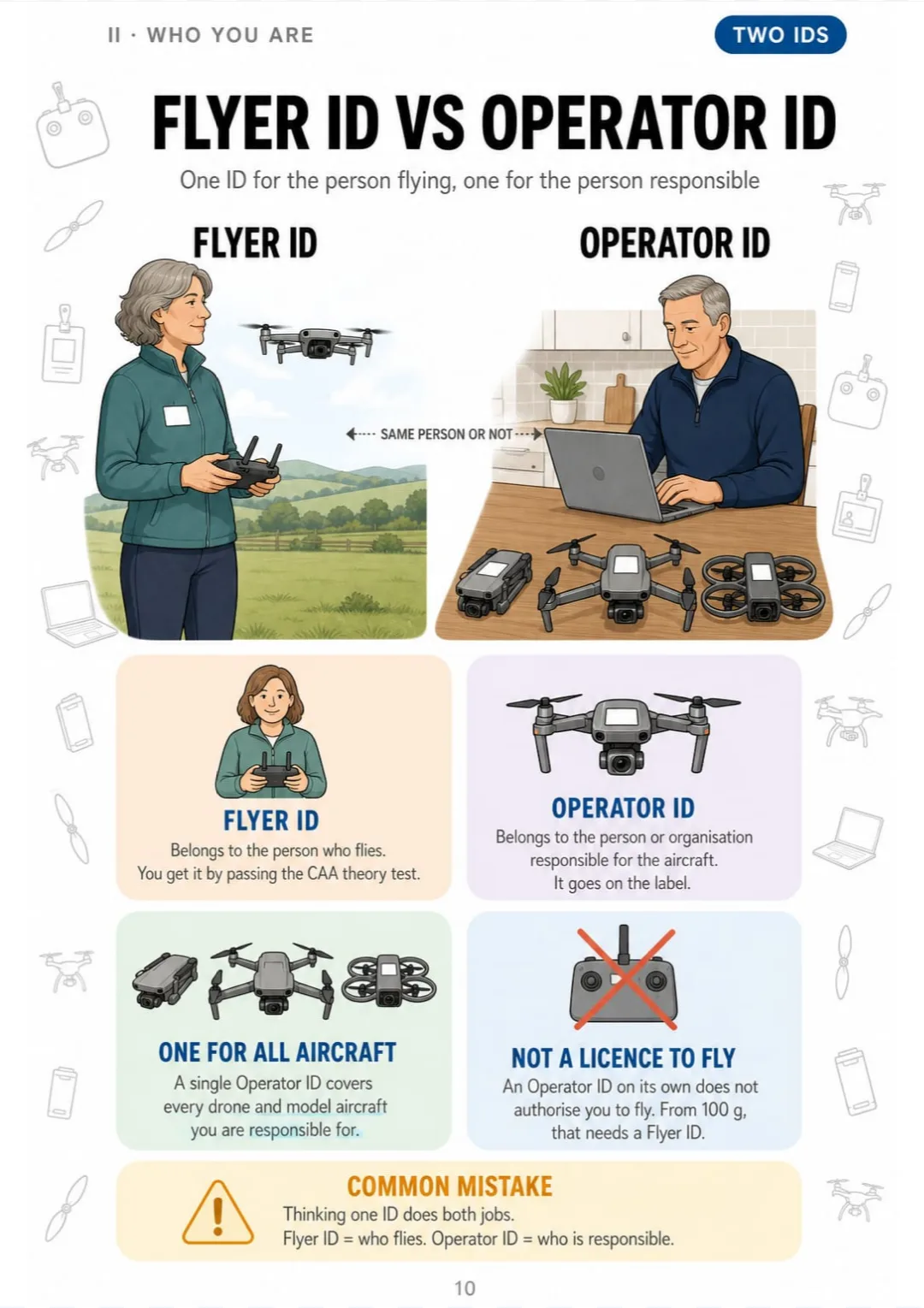
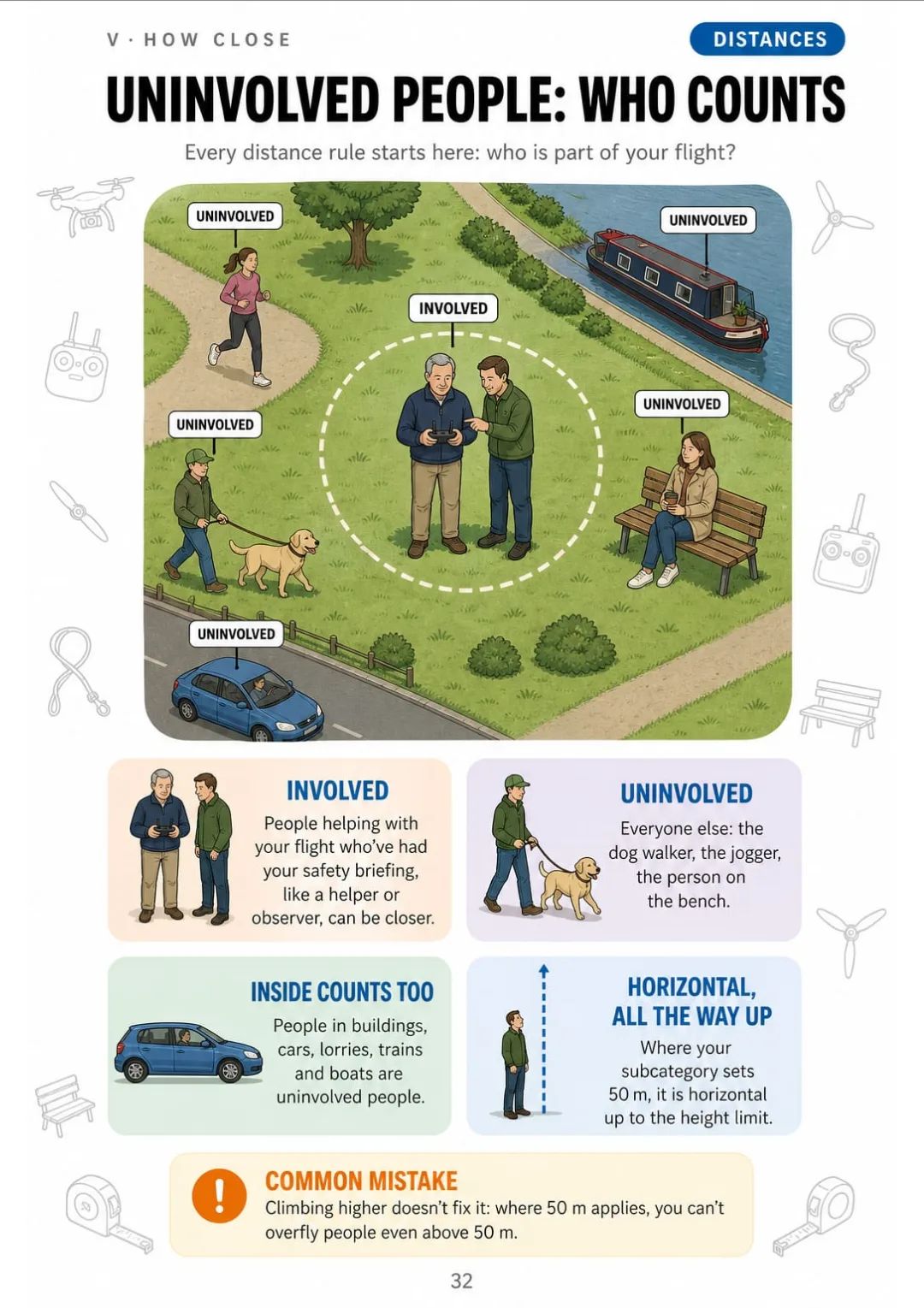
The same goes for the 120 m limit, Flyer ID vs Operator ID, who counts as an uninvolved person, the UK class marks and the preflight check: each one has its own page.
So you run the check, you know why each step is there, and you take off without going back to the website.

Start here, your IDs, airspace, how high you can fly, how close you can fly, class marks and Remote ID, flying safely, beyond the hobby and revision for test day: 66 pages, all illustrated.
Think of it this way:
You're on a cliff top on the coast, the drone hovering out over the sea, and the app says 100 m. Are you still within the limit?
You open the page on height and see it drawn to scale: 120 m (400 ft) above the closest ground below the drone, not above the spot you took off from. Out over the sea from a 60 m cliff, 100 m on the app means 160 m above the water: over the limit.

It's the same with the airspace check, Flyer ID vs Operator ID, uninvolved people, the UK class marks and Remote ID: each one on its own page.
Drone Pilot in Pictures is 9 parts and 62 topics, all drawn, and it ends with a revision section: the whole Drone Code on one page, the numbers to know and a five-step 'Can I fly here?' decision.
What you see drawn, you don't have to memorize.
How to use the book, who makes the rules, drones and model aircraft, the Open, Specific and Certified categories, and why you weigh your drone first.
Flyer ID vs Operator ID, when you need each one, the theory test step by step, renewals and fees, labelling, families and shared drones, and club flying.
The check before every flight, airport flight restriction zones seen from above, prisons, NOTAMs, parks and beaches, private land, emergencies and priority for manned aircraft.
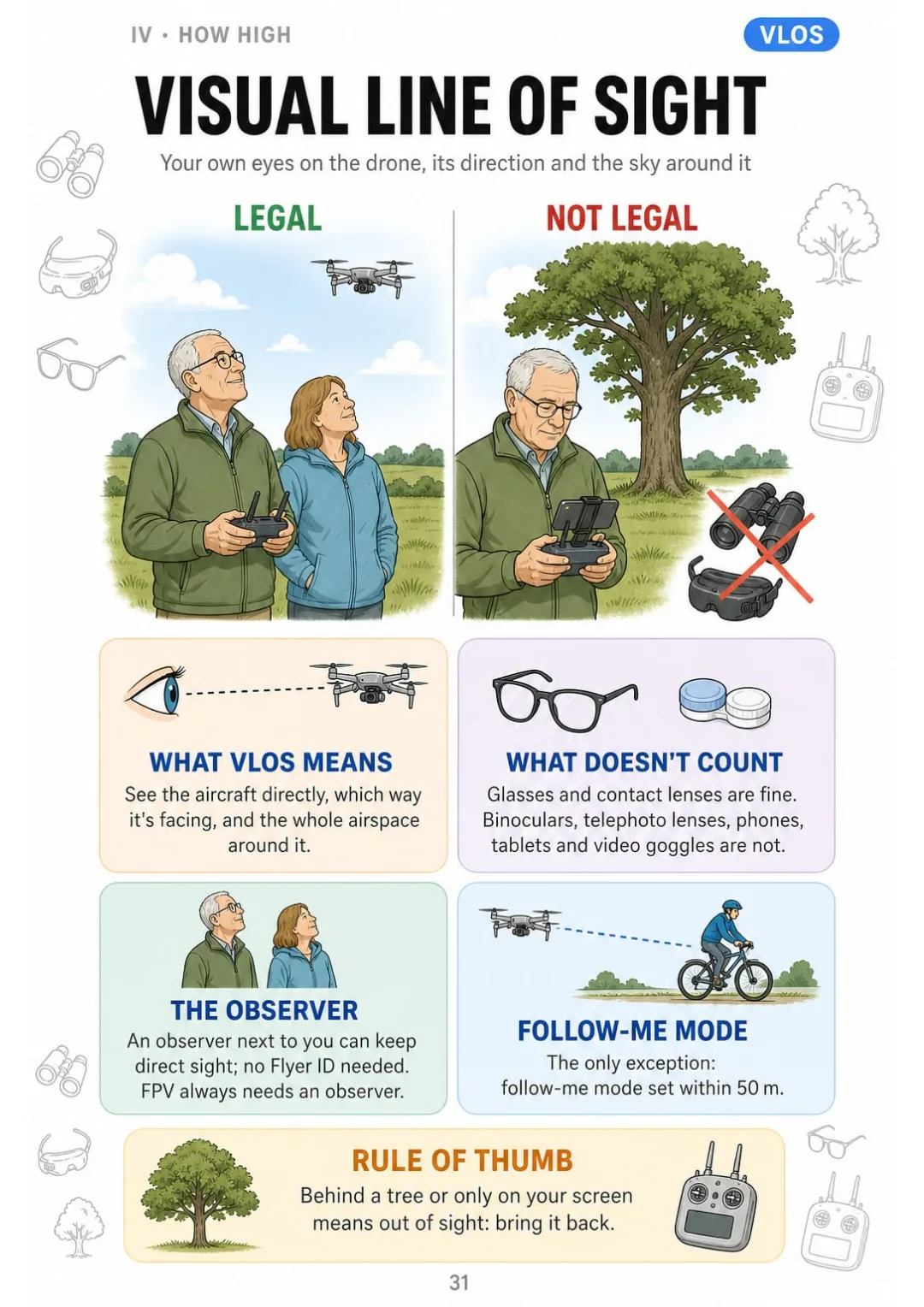
The 120 m (400 ft) limit, measured from the ground below, hills and valleys, the tall obstacle exception and visual line of sight.
Who counts as uninvolved, never over crowds, A1, A2 and A3, the sub-250 g mini, older drones, the three circles on one page and roads, buildings and vehicles.
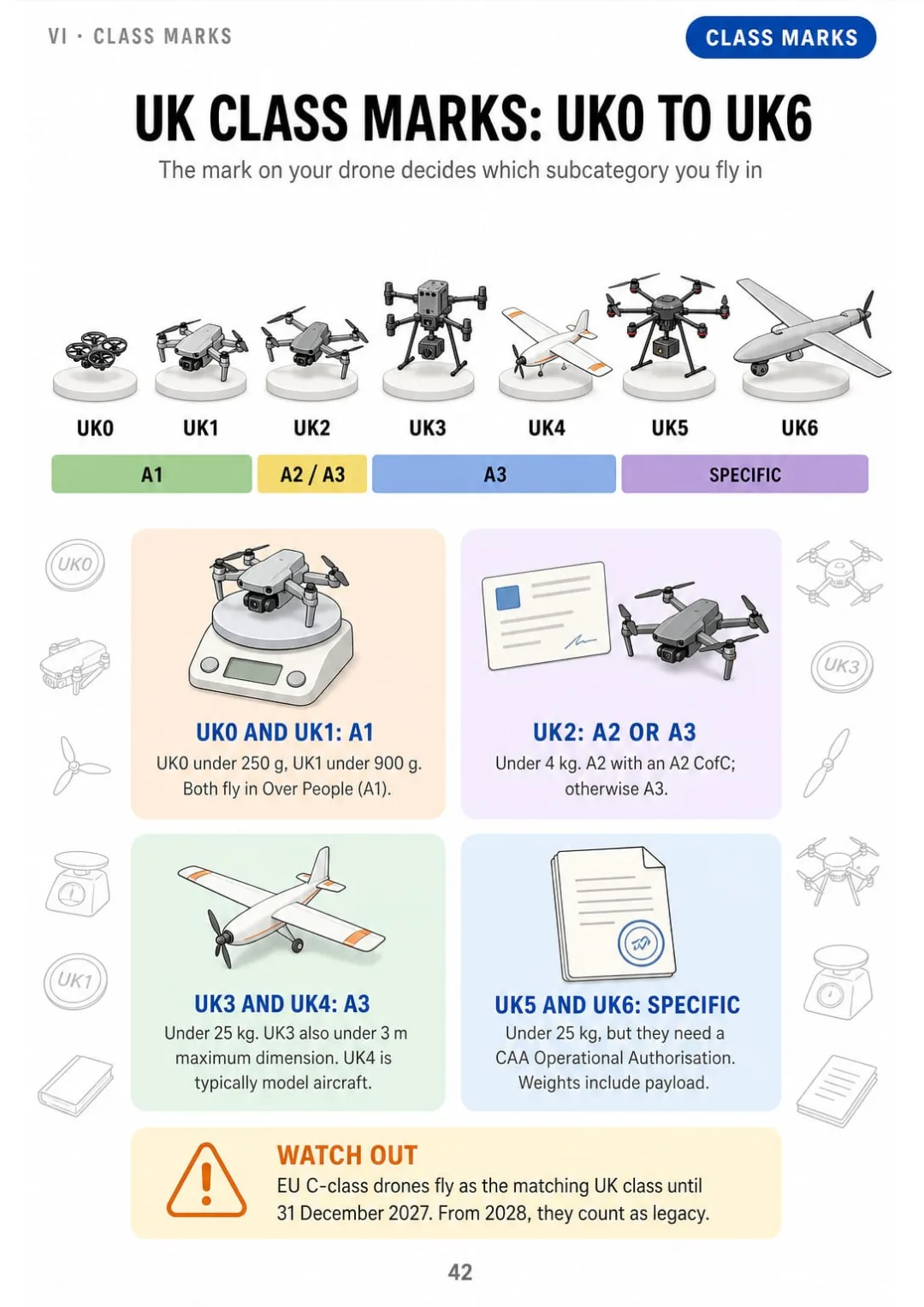
UK class marks from UK0 to UK6, legacy drones without a mark, what Remote ID does and when it applies, and night flying with the green light.
The preflight check in the same order, wind, rain and cold, LiPo batteries, take-off sites, Return to Home, lost link and GPS, interference, animals and what to do after an incident.
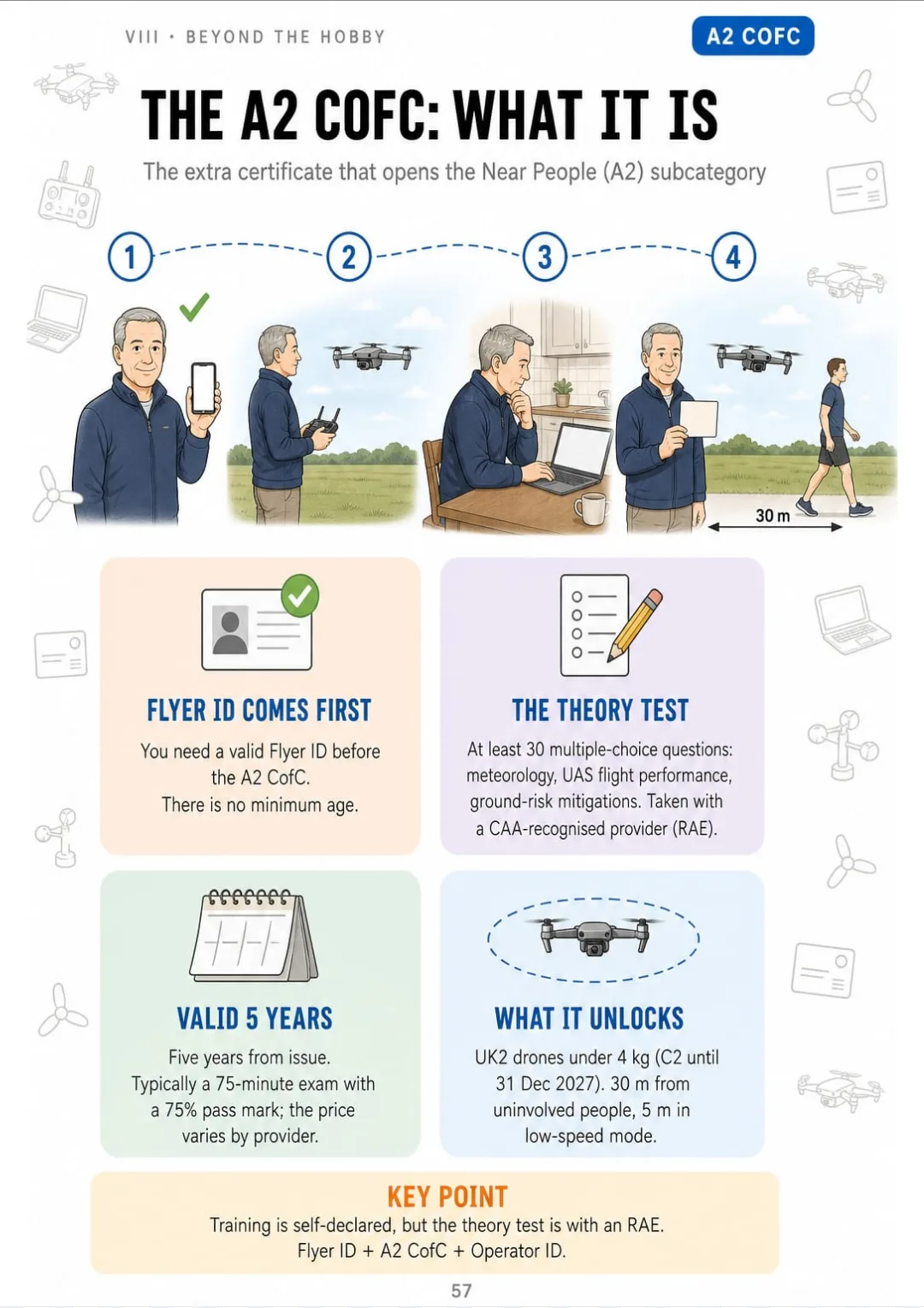
What the A2 CofC is, photos and privacy, flying for money in the Open category, when you need the Specific category and taking your drone abroad.
The whole Drone Code on one page, the numbers to know, how test questions are worded, the five-step 'Can I fly here?' decision and common mix-ups.
At the end of the book: A revision section with the whole Drone Code on one page, the numbers to know and a five-step 'Can I fly here?' decision.
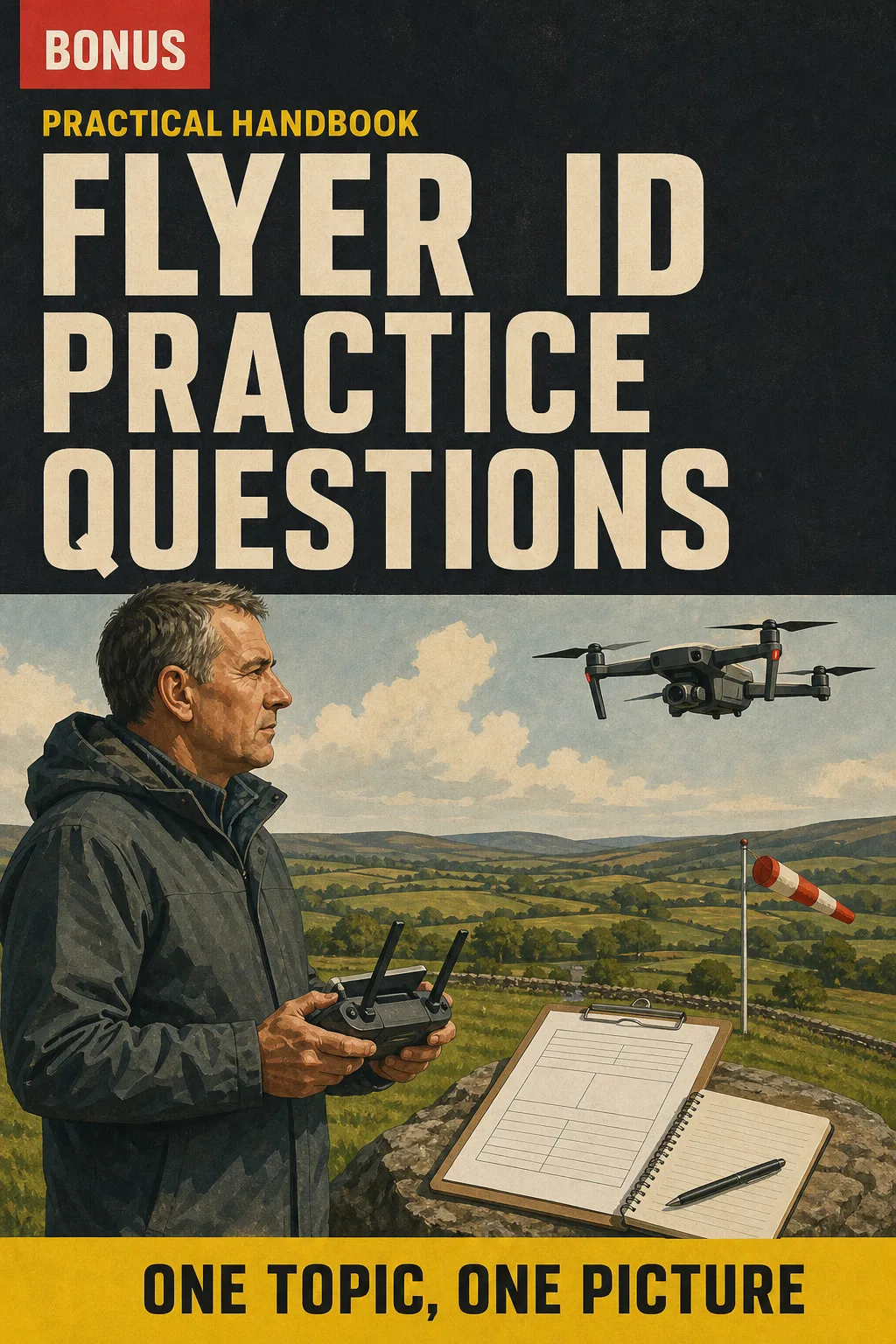
Test yourself with exam-style questions on every topic, each answer explained with a short drawing, so you sit the online theory test without second-guessing.

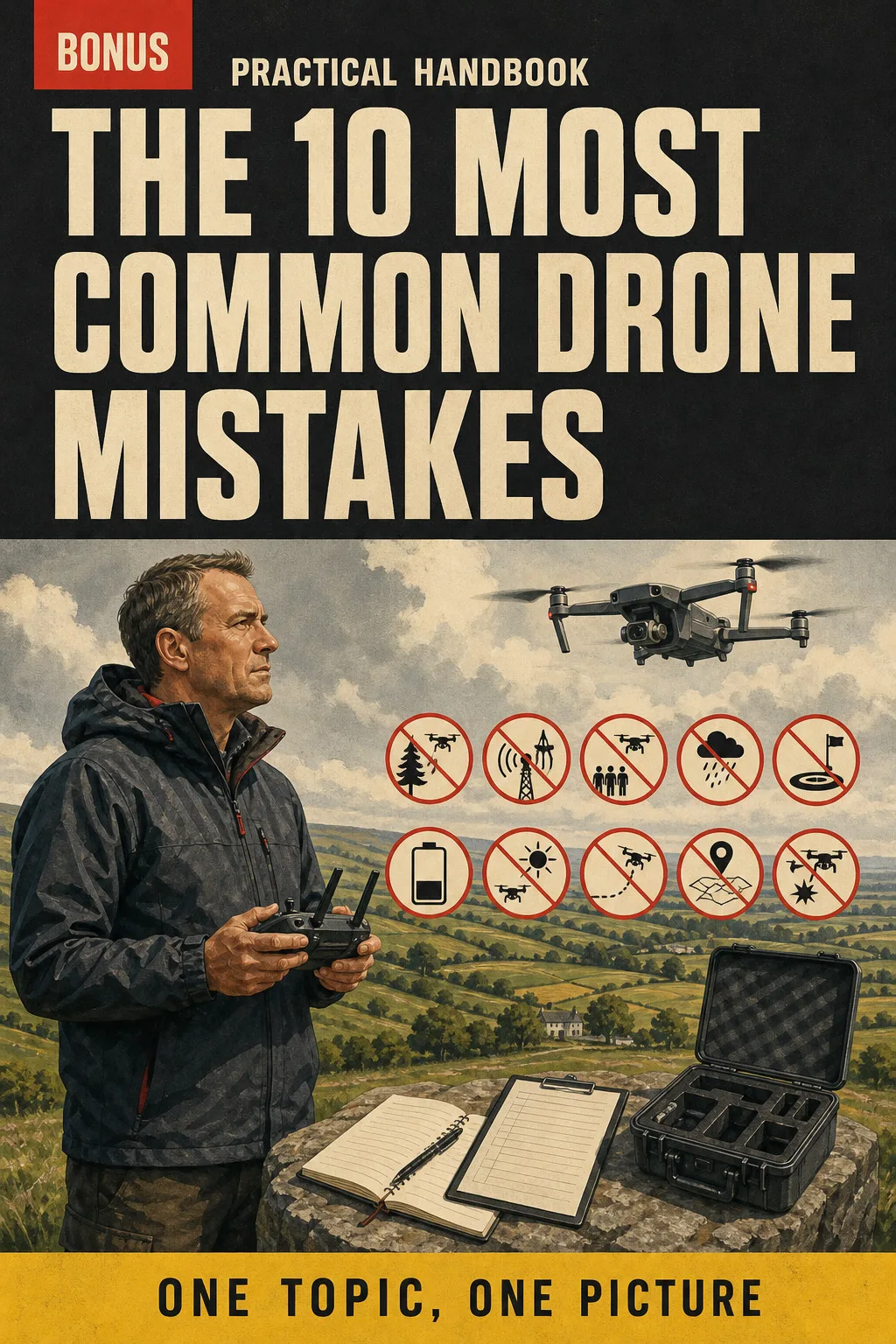
One page per mistake new pilots often make, from measuring height from the wrong point to flying over a crowd, with the correct rule drawn next to it for a quick revision.
📄 This is a digital PDF book sent to your email: nothing is printed or shipped.
PDF by email: We email you Drone Pilot in Pictures as a PDF, together with the two free books. It's a single payment: no installments, no extra charges.
You see what you need before the first flight, in order: your IDs, where you can go, how high and how close. No hunting through web pages.
You revise each rule as a drawing, then test yourself with the practice questions, so the wording on the day doesn't throw you.
You check what you've been doing against the rules, from height on a cliff to distances from people, and see what the A2 CofC adds.
📄 This is a digital PDF book sent to your email: nothing is printed or shipped.
Try Drone Pilot in Pictures for 30 days, bonus books included.
We refund everything if the file won't open, if the book isn't what you see here, if you were charged twice or if the email doesn't arrive. Just email us.
You pay once. No subscriptions.
Yes. Under the CAA rules in force from 1 January 2026, you need a Flyer ID if your drone weighs 100 g or more, and an Operator ID if it weighs 100 g or more or has a camera. So the rules apply to most sub-250 g minis too. The book has a page just for the sub-250 g mini: what you can and can't do with it.
From the CAA's published guidance: the Drone and Model Aircraft Code, UK Regulation (EU) 2019/947 as amended, the Air Navigation Order 2016 and CAP 722, with the rules in force from 1 January 2026.
No. It's an independent study guide, not affiliated with the CAA. The official information is free on the CAA website, and you should keep using it. What the book adds: every rule as a drawing, in one order you can follow in a field, practice questions in the style of the test and the whole Drone Code on one page for revision.
No. You still take the Flyer ID theory test on the CAA's website, and the A2 CofC with a recognised assessment entity. The book helps you prepare and revise.
No. They're written for this book, in the style of the test, to check you've understood each topic. They aren't official questions.
The book and the 2 bonus books arrive as PDFs by email.
No. It's a one-off payment. No subscription.
It's a PDF, not a printed book, so nothing is posted. You can print it at home or at a print shop and keep it in your drone bag.
You have 30 days. We refund everything if the file won't open, if the book isn't what you see on this page, if you were charged twice or if the email doesn't arrive: just email us.
No more rereading the rules without anything sticking.
The 120 m limit and the A1, A2 and A3 distances, drawn and done.
You sit the Flyer ID test knowing where everything is.
Drawings make studying faster.
The book is right below.
One-time payment: US$ 27 · Guarantee: 30 days · PDF by email
YES, I WANT DRONE PILOT IN PICTURES FOR US$ 27📄 This is a digital PDF book sent to your email: nothing is printed or shipped.